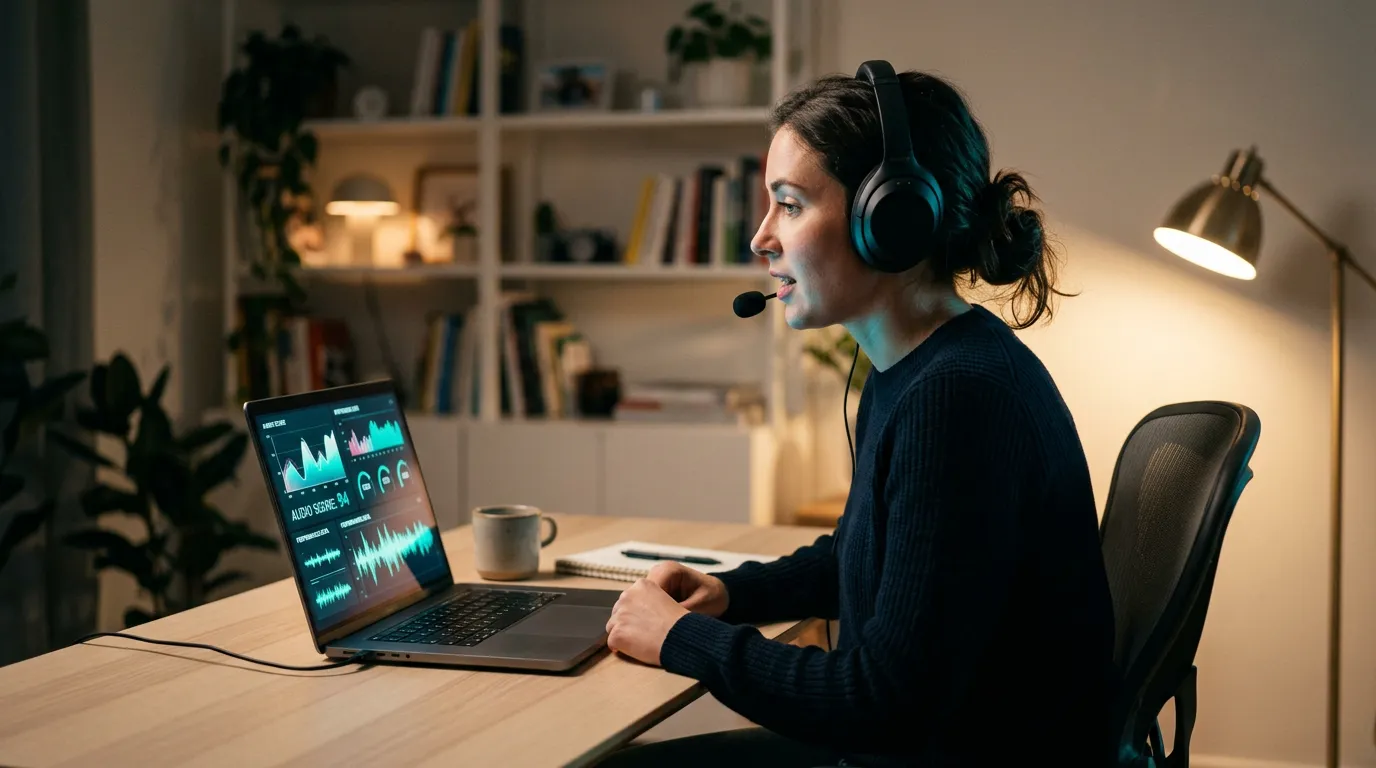

You are halfway through a video interview when the hiring manager asks a question you did not prepare for. A tool running quietly on your screen listens, writes an answer, and tells you what to say next.
It sounds useful. In that moment, it probably feels useful too.
That is the promise behind AI interview cheating tools. They offer a quick answer when your mind goes blank. But there is a catch. The answer may help you through the next 60 seconds while making the rest of the interview, and possibly the job itself, much harder.
It is easy to understand why these tools are growing. The job market is difficult, rejection is exhausting, and employers already use AI throughout recruitment. Remote interviews also make outside help easier to hide.
Still, using AI to prepare is not the same as secretly using it to answer for you. One builds your ability. The other hides it.
What are AI interview cheating tools?
AI interview cheating tools provide hidden help during a real interview. Depending on the product, they can:
- Listen to the interviewer's question and create an answer in real time
- Display suggested talking points in an overlay
- Generate code during a technical interview
- Read information from a shared screen
- Produce responses based on a CV or job description
Not every use of AI in a job search is cheating. You can use it to research a company, check the grammar in your CV, create practice questions, or run a mock interview.
The difference comes down to permission and honesty.
If an employer allows AI during an assessment, you can use it within those rules. If you secretly read generated answers while the interviewer believes they are hearing your own judgement and experience, you are giving them a false picture of your ability.
Is using AI during an interview cheating?
The short answer is yes, if you hide it and use it to produce answers that the employer expects to come from you.
There are legitimate exceptions. An employer may allow AI in an open book technical task because using AI is part of the job. Accessibility software, approved notes, and live captions are not the same as a concealed answer generator either.
If the rules are unclear, ask. A simple question before the interview is much safer than assuming a hidden tool is allowed.
Why are AI interview cheating tools on the rise?
1. Generative AI has made real-time answers cheap and accessible
Software can now listen to a question, turn it into text, and write a polished response within seconds. What once needed specialist technology can now run in a browser or a simple desktop app.
Some products are also marketed as a clever way to beat the interview. That matters. If a tool is presented as a normal productivity aid, it becomes easier to ignore the fact that it is secretly doing the work being assessed.
2. Remote interviews create more opportunity
Virtual interviews save time and open roles to more people. They also take place in a space the employer cannot see.
A second screen, hidden overlay, phone, or separate audio feed is much easier to conceal at home than in an interview room. That does not make remote candidates dishonest. It simply makes covert help easier to use.
3. Candidates are under genuine pressure
Most people do not reach for a cheating tool because they feel relaxed and confident. They do it because they are scared of failing, urgently need work, or believe everyone else has an unfair advantage.
Long application processes and repeated automated rejections can make candidates feel that recruitment is already impersonal. If employers use AI to filter applications, some applicants reason that using AI to pass the interview merely levels the playing field.
That frustration is real. So is the risk. Hiding your ability creates another layer of mistrust, and you are the person most likely to pay the price.
4. The boundary between AI preparation and AI cheating is poorly explained
Many employers still do not give candidates a clear AI policy. This leaves people wondering whether interview preparation, an open book assessment, and a hidden answer generator are all part of the same grey area.
They are not. Preparing with AI helps you build your answer. Secretly reading an AI response during the interview replaces your answer.
5. Early success makes the tools look safer than they are
Here is the uncomfortable truth: these tools can sometimes work.
A study published in the International Journal of Selection and Assessment found that responses in its ChatGPT assisted conditions scored significantly higher than responses in the group without ChatGPT. The researchers warned that this could help less qualified candidates move further through a hiring process. Read the study.
That explains the appeal. But getting through one interview is not the same as being ready for the job.
How interview cheating can disadvantage the candidate
Most articles focus on the employer being deceived. But the candidate can lose too, sometimes weeks or months after the interview.
You stop practising the skill you actually need
An interview tests more than your ability to read a plausible answer. It tests whether you can listen, remember relevant experience, explain your judgement, and adapt when the conversation changes direction.
When an AI interview answer generator does that work, you miss the practice your brain needs. Instead of learning to organise an example using the STAR method, you learn to wait for text to appear.
Your answers may become less convincing
AI answers can sound impressive at first. They can also sound strangely generic. The tool may choose words you would never use, invent a detail you cannot defend, or answer a slightly different question.
A good interviewer will keep digging. Why did you make that decision? What options did you reject? What would you do differently now?
If the first answer was not really yours, every follow-up makes that harder to hide.
You carry the fear of being caught
Using a hidden assistant gives you another job to do. You have to listen to the interviewer, wait for the tool, read its response, decide whether it makes sense, and hide all of this on camera.
That is a lot to manage when you are already nervous. Long pauses, wandering eye contact, flat delivery, and weak follow-up answers can make you look less confident, not more.
Employers are reacting, too. In 2025, the Institute of Student Employers reported that only 15% of surveyed employers had never suspected or identified cheating in assessments, down from 22% the previous year. Undisclosed AI use during interviews was the most commonly reported form of misconduct, cited by 61% of respondents. See the ISE findings.
You could lose the opportunity and the relationship
If an employer believes you have broken the assessment rules, it may end the interview process or withdraw an offer. Even without a formal penalty, trust is difficult to rebuild.
Gartner reported in 2025 that 6% of 3,000 surveyed candidates admitted taking part in interview fraud, including impersonation. It also predicted that employers would respond with stronger anti-cheating safeguards and more in-person verification. Read Gartner's report.
You may get a job you are not prepared to do
This may be the biggest risk of all. The tool disappears after the offer. The expectations created by your answers do not.
If you appeared able to solve unfamiliar problems, explain technical decisions, or lead difficult conversations independently, your new team will reasonably expect you to do those things. Starting a job with a gap between perceived and real ability can turn the apparent win into months of stress.
Why using a concealed AI interview assistant is wrong
The problem is not simply that AI was involved. The problem is the false impression.
The interviewer thinks they are assessing your judgement, knowledge, and communication. In reality, they may be assessing a response produced by software that has read your CV and the job description.
That has three consequences:
- It is unfair to other candidates. Honest applicants are compared with answers generated by a system they were not told they could use.
- It prevents meaningful assessment. The employer cannot tell whether it is evaluating the candidate's judgement or a model's output.
- It damages trust for everyone. Employers respond with more surveillance, extra assessments, and compulsory in-person stages, adding friction even for candidates who have done nothing wrong.
Employers have responsibilities too. They should explain when they use AI, design assessments that resemble the real job, and tell candidates what help is allowed. Candidates should be able to ask whether they can use notes, documentation, or AI without feeling that the question itself will count against them.
Here is a useful test. Would you be comfortable telling the interviewer that the tool is running?
If the advantage depends on hiding it, you probably already know that it crosses the line.
Ethical alternatives to AI interview cheating tools
You do not have to choose between struggling alone and secretly outsourcing your answers. AI can still be useful. Use it where it helps you learn.
Run realistic mock interviews
Practise answering unfamiliar questions aloud. Add a time limit and follow-up questions. You will quickly hear the gaps that silent preparation hides.
Build evidence, not scripts
Create a bank of real examples from work, education, volunteering, and personal projects. Note the situation, what you did, what happened, and what you learned.
Do not memorise a perfect paragraph. Learn the facts of your own story so you can adapt it to the question.
Ask for feedback you can measure
Look at answer relevance, structure, speaking pace, filler words, and whether you explained your personal contribution. Useful feedback tells you what to improve on the next attempt.
Research the employer before the interview
Use the job description, company website, public reporting, and product information to understand the role. AI can help organise that research, but verify important claims and express the conclusions in your own words.
Clarify the rules
For technical or open-book interviews, ask what resources are allowed. Some employers want to see how you use documentation or AI. Others are explicitly testing unaided problem-solving. Knowing the rules removes ambiguity.
A better way to use AI
Instant Interview is made for practice before the real conversation. It asks questions, responds to your answers, and shows you where you could improve.
The aim is not to hand you a perfect response. It is to help you notice when you ramble, lose structure, or struggle with a follow-up, then give you another chance to try.
That is the difference: a cheating tool speaks for you. A practice tool helps you get better at speaking for yourself.
Use AI to become better, not to appear better
AI interview cheating tools are growing for understandable reasons. The job market is competitive. Remote assessment is easy to game. AI rules are unclear. Candidates are tired of being judged by automated systems.
Those pressures explain the temptation. They do not protect you from the consequences.
The safer and more valuable advantage is genuine preparation. Practise speaking. Test your examples. Let follow-up questions expose weak areas. Measure your delivery and try again.
AI should help you enter an interview with stronger skills. It should not whisper somebody else's answer while you are being assessed.
Ready to prepare honestly? Start a live AI mock interview and get feedback you can use before the real conversation.
Adrian, Instant Interview