You Can't Practise Interviews by Thinking About Them
Here's something I've seen a hundred times: someone spends three hours reading interview tips, mentally rehearses their answers, and walks into the real thing feeling prepared. Then they open their mouth and it all falls apart. The words don't come out the way they sounded in their head. They say "um" fourteen times. Their STAR answer has no result.
The gap between knowing what a good interview answer looks like and actually delivering one out loud is enormous. And that gap is exactly what AI mock interviews are designed to close.
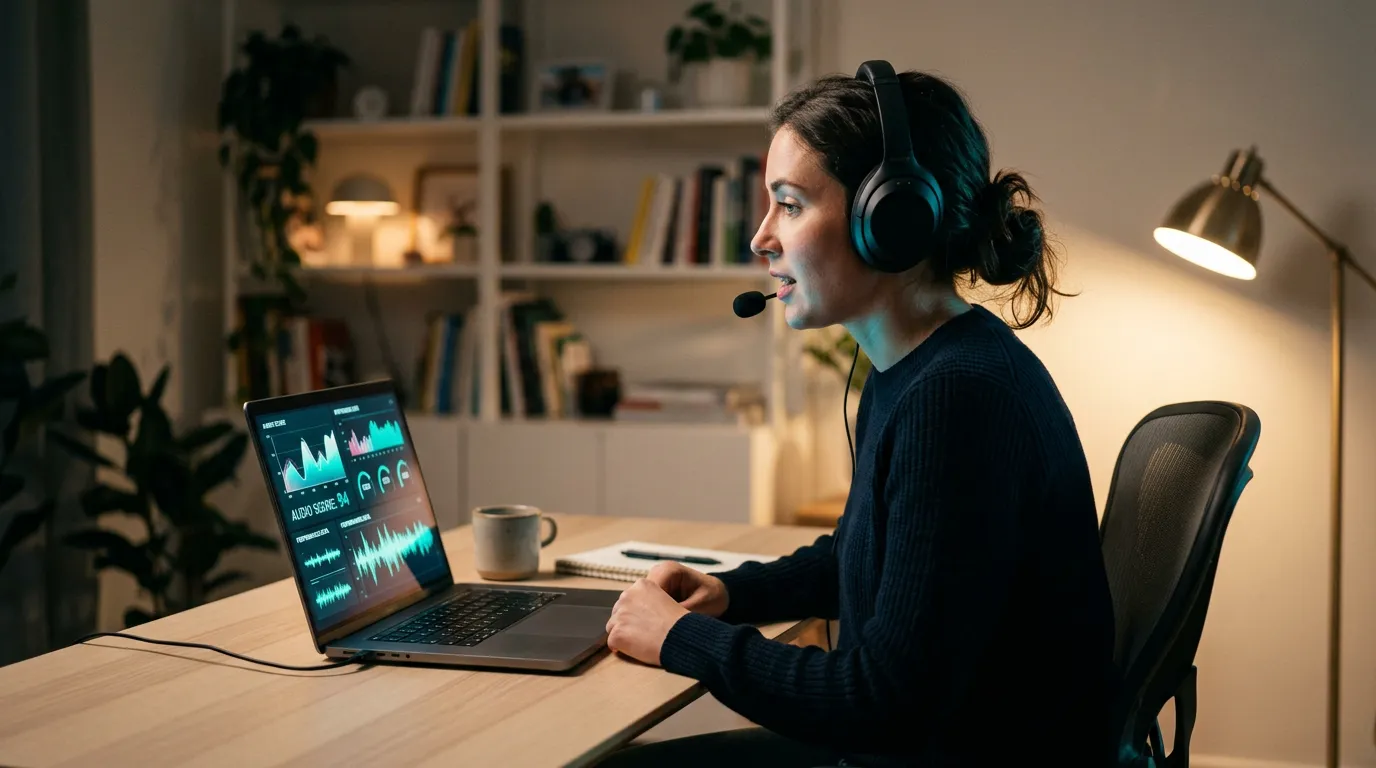
An AI mock interview tool simulates a real interview conversation, with voice, in real time, so you can practise speaking your answers, not just thinking them. It listens to what you say, asks follow-up questions, and gives you scored feedback on the things that actually matter: structure, pacing, filler words, relevance.
If you've never used one, here's exactly how they work.
Step 1: You Pick Your Interview Type
Most AI mock interview tools let you choose the kind of interview you want to practise. This matters because a behavioural interview and a system design interview test completely different skills.
Common options include:
- Behavioural: "Tell me about a time when..." questions scored on STAR structure
- Technical: problem-solving, architecture, algorithms
- Case study: consulting-style business analysis
- Leadership: people management, stakeholder scenarios
- Casual/cultural fit: communication and personality
Some tools also let you personalise further. On Instant Interview, for example, you can enter your target job title and company, and the AI will research that company and tailor questions to the specific role. That means a product manager interviewing at a fintech gets different questions than a software engineer targeting a health-tech startup.
This is a big deal. Generic questions are fine for warming up, but job-specific questions are where real preparation happens.
Step 2: You Have an Actual Conversation
This is the part that surprises most people. You're not typing answers into a text box. You're speaking out loud, and the AI is listening and responding in real time, like a real interviewer would.
The AI asks a question. You answer by talking. It listens to your full response, then asks a follow-up based on what you actually said. If you mention leading a migration project, it might ask about the technical challenges you faced. If you describe a conflict with a stakeholder, it probes how you resolved it.
This adaptive conversation is what separates AI mock interviews from scripted question lists or flashcards. You can't predict the follow-ups. You have to think on your feet. Which is exactly what a real interview feels like.
I once watched someone practise the same answer five times with flashcards and nail it every time. Then in a live mock session, the AI asked a follow-up they hadn't anticipated, and they froze for eight seconds. That's the kind of gap you only discover when you're actually speaking under pressure.
Step 3: Real-Time Analysis Happens in the Background
While you're talking, the AI isn't just recording your words. It's analysing how you speak.
| Metric | What It Measures | Ideal Range |
|---|---|---|
| Speaking pace (WPM) | How fast you talk | 120–160 WPM |
| Filler word rate | How often you say "um," "like," "you know" | < 1 per minute |
| STAR score | Whether your answer has clear Situation, Task, Action, Result | 7+ out of 10 |
| Answer relevance | Whether you actually answered the question asked | 80%+ |
| Vocabulary diversity | Range of words used (avoids repetition) | Higher is better |
These aren't subjective opinions. They're quantified measurements of how you performed. Most people have never had their speaking pace measured, let alone their filler word rate. That's precisely why these metrics are so useful. They reveal problems you literally can't hear yourself.
Step 4: You Get Instant Feedback and a Performance Report
When the session ends, you don't just get a "good job" or "needs improvement." You get a detailed breakdown.
A typical AI mock interview report includes:
- Overall score: a single number summarising your performance
- Per-answer scores: how each individual answer rated on structure, relevance, and delivery
- Specific feedback: what was strong, what was weak, and concrete suggestions for improvement
- Metric trends: how your pace, filler rate, and scores compare across sessions
The per-answer detail is where the real value sits. You might discover that your first two answers were solid 8s, but your answer about conflict resolution scored a 4 because you never stated the result. That's actionable. You know exactly which answer to rework.
Some tools, Instant Interview included, also rewrite your weaker answers for you, showing you what a stronger version would sound like. You can compare your original answer with the improved version side by side.
Why This Beats Practising Alone (or With a Friend)
Look, practising with a friend is better than nothing. But it has real limitations.
Friends don't measure anything. They'll tell you "that sounded good" or "maybe try to be more specific." They won't tell you that your speaking pace dropped to 95 WPM in the middle of your answer, or that you used 11 filler words in 90 seconds. The numbers matter, and humans are terrible at tracking them in real time.
Friends give inconsistent feedback. Their standards drift depending on their mood, how long you've been practising, and whether they want to be encouraging or honest. An AI gives you the same evaluation criteria every single time.
Friends aren't always available. You want to practise at 11pm the night before your interview? Good luck finding a willing partner. AI tools don't sleep, don't cancel, and don't get tired of hearing the same answer for the fifth time.
You perform differently with friends. The social dynamic changes everything. You're more relaxed, you laugh through mistakes, you get feedback cues from their reactions. None of that exists in a real interview. Practising with an AI, where there are no social cues and no safety net, is closer to the real pressure.
That said, AI mock interviews aren't a replacement for human connection in your prep. They're a replacement for the dozens of repetitions you need to build muscle memory. Do the reps with AI, then do your final polish with a real person.
Progress Tracking: Seeing Yourself Improve
One of the most underrated features of AI mock interview tools is progress tracking over multiple sessions.
When you practise once, you get a snapshot. When you practise five times, you get a trend line. And trends tell you things a single session can't.
Maybe your STAR scores are climbing but your speaking pace is getting faster each session, a sign that you're rushing more as you get comfortable with the content. Maybe your filler word rate dropped from 3.2 per minute to 0.8 over two weeks. That's measurable proof that the practice is working.
This kind of data-driven progress tracking turns interview prep from "I hope I'm getting better" into "I can see I'm getting better." It's motivating in a way that vague reassurance from a friend simply isn't.
What to Look For in an AI Mock Interview Tool
Not all tools are the same. Here's what separates the useful ones from the gimmicky ones:
- Voice-based, not text-based. If you're typing answers, you're not practising for an interview. You're practising for an essay. The whole point is to speak out loud.
- Adaptive follow-ups. The AI should respond to what you actually said, not just cycle through a fixed list of questions.
- Quantified feedback. Vague comments like "good answer!" are worthless. You need numbers: WPM, filler rate, structure scores.
- Industry-specific questions. Generic questions are a starting point, not a destination. The tool should let you practise for your specific role and company.
- No install required. If you have to download an app, set up a camera, or configure anything complicated, you won't use it consistently. Browser-based tools remove friction.
Try it: Start AI interview practice online with 10 free minutes →
Compare: See how AI mock interviews stack up against other platforms →
Who Benefits Most
AI mock interviews aren't just for graduates going through their first interview round. They're useful at every career stage:
- Career changers who know their stuff but haven't interviewed in years
- Senior professionals who are excellent at their job but rusty at talking about it under pressure
- Non-native English speakers who want to build fluency and reduce hesitation in a judgment-free environment
- Anyone with an interview in the next 48 hours who needs focused, high-intensity practice
The common thread is that these are people who benefit from repetition, and AI gives you unlimited repetitions without the social cost of asking someone to listen to you answer the same behavioural question for the seventh time.
The Bottom Line
AI mock interviews work by doing three things traditional practice can't: they simulate real conversational pressure, they measure your performance with precision, and they track your improvement over time.
You can read every interview guide ever written. You can memorise perfect STAR answers. But until you've practised delivering them out loud, under pressure, with no safety net, and with real-time feedback telling you exactly where you're weak, you haven't actually prepared.
That's the gap these tools fill. And honestly, once you see your first performance report and realise how different your actual delivery is from what you imagined, you won't want to go back to practising in your head.
Adrian, Instant Interview