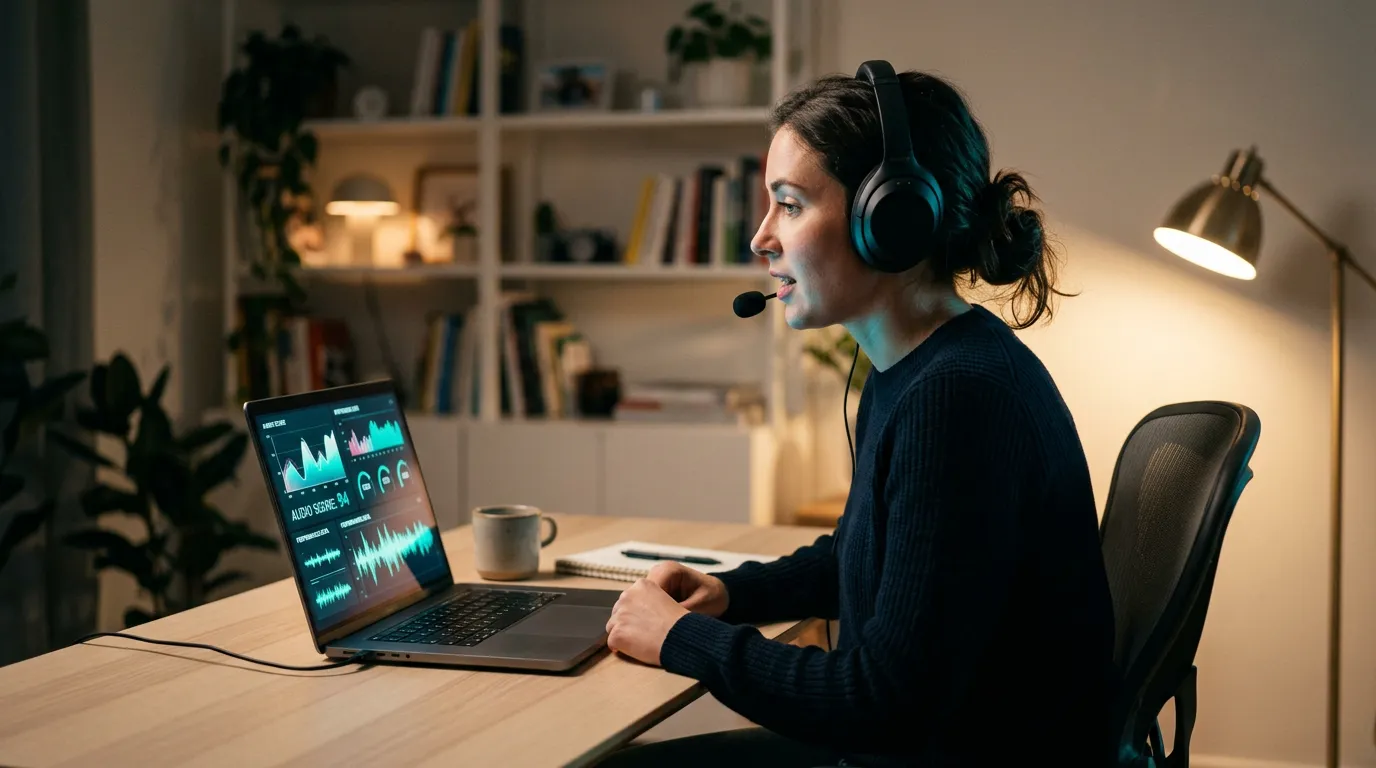
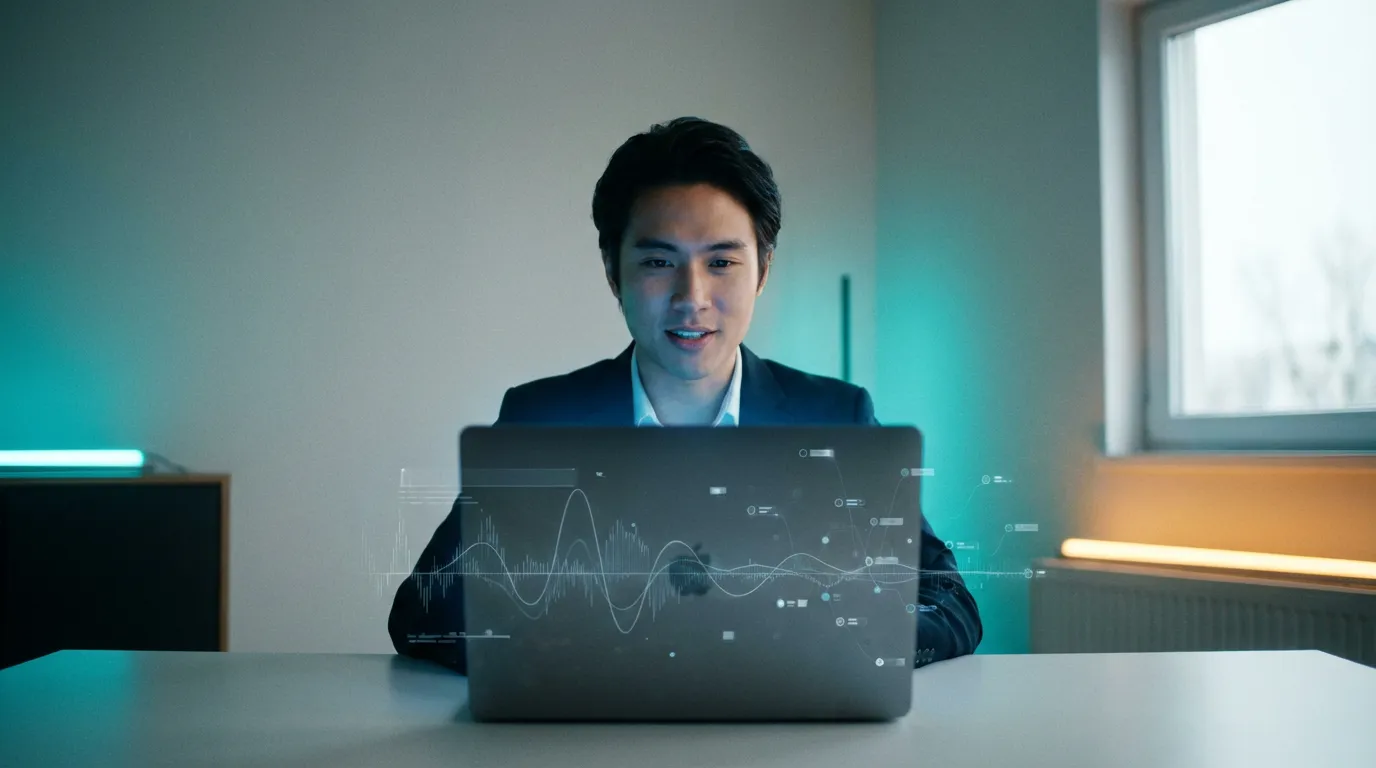
The Camera Is Already Analysing You
Most candidates prepare for a human on the other end. In 2026, that assumption is wrong half the time.
Nearly 45% of companies now use AI-powered tools to screen video interviews before a human ever watches them. You submit a recording (or join a live AI-conducted session) and the system analyses your performance automatically. Only the candidates who pass move forward.
The problem isn't that people give bad answers. It's that they've never practised for this format.
What AI Interviewers Actually Measure
This is where most guides get it wrong. AI interview tools aren't just doing keyword matching on your transcript. They're analysing how you speak, not only what you say.
The three metrics that most AI screening tools score:
Speaking pace. The ideal range is 120–160 words per minute. Too slow signals a lack of confidence or preparation. Too fast makes you hard to follow and suggests anxiety. Most people don't know their natural rate, and it often drifts badly when they're nervous.
Filler word frequency. Every "um," "like," "you know," and "sort of" is logged. AI systems don't find fillers charming the way a sympathetic human might. A rate above 2–3 per minute typically flags your recording for review or counts against your score. Strong candidates average under one per minute.
Answer structure. AI tools score whether your answers follow a recognisable narrative arc. STAR (Situation, Task, Action, Result) is the dominant framework, and systems trained on tens of thousands of interview responses have learned to detect when it's present or absent. A rambling answer that never reaches a concrete result scores poorly regardless of the content.
Some tools go further, analysing emotional tone, eye-contact signals (where you're looking on screen), and pause patterns. But pace, fillers, and structure are the core three you can control with practice.
Why Your Normal Preparation Falls Flat
If you've ever practised an interview answer with a friend or into a notes document, you've been training for the wrong format.
Human interviewers give constant feedback: a nod, a follow-up question, a shift in expression. You adjust in real time. With an AI interviewer (or a video submission), there's nothing. No reaction. No cue that you're going on too long or drifting off topic.
This absence of feedback does two things. First, it throws off your pacing. Without a human presence anchoring the rhythm of the conversation, most people either rush through answers or trail off into silence. Second, it makes fillers worse. When there's no social feedback loop, your brain reaches for gap-fillers more often.
The other gap: most people rehearse answers in their heads or on paper. Speaking and writing use different cognitive muscles. What sounds polished in your mind often sounds hesitant, flat, or filler-heavy when you actually say it aloud.
Five Things to Do Before Your Next AI Video Interview
1. Find out your natural speaking pace
Record yourself answering a standard question ("Tell me about yourself" works well), then count the words and divide by the time. If you're below 100 WPM, your answers will feel laboured. Above 180, you'll be hard to follow. Knowing your baseline is the first step to adjusting it.
2. Practise with a filler word target
For one week before your interview, practise every answer with the goal of zero fillers. This sounds easy until you actually try it. When a filler word rises, replace it with a deliberate pause, a silent beat of one second. Pauses sound composed. "Um" sounds nervous. The difference in perception is significant.
3. Structure every answer before you open your mouth
AI scoring tools reward clear narrative arc. Before you speak, run through STAR in your head: what's the Situation, what was your Task, what Action did you take, and what was the Result? Even five seconds of mental structuring produces measurably more coherent answers. The STAR method guide covers this framework in depth if you want to build fluency before your interview.
4. Look at the camera, not the screen
This one sounds obvious and is almost universally ignored. When you look at the interview question or your notes on screen, to the AI (and to any human watching later) you appear distracted, evasive, or unconfident. Set your camera at eye level, close other windows, and address the lens directly. It feels unnatural for the first few sessions and then becomes instinctive.
5. Record yourself — and watch it back
This is the single most effective preparation step that almost nobody does. Set up your camera, answer three or four questions, and play back the recording immediately. You will hear filler words you didn't notice you were using. You'll see yourself looking away from the camera. You'll catch the moment your pace collapsed. One session of watching yourself back is worth ten sessions of silent rehearsal.
The Silence Problem Nobody Talks About
In a human interview, silence triggers a response. The interviewer nods, asks a follow-up, or moves on. In an AI interview, silence is just silence, and most candidates fill it badly.
When you've finished an answer, stop. Don't trail off with "... and yeah, that's sort of what happened." Don't add filler sentences to fill the void. End with your Result clearly stated, then be still. A clean stop followed by silence reads far better to an AI system than a meandering finish.
Similarly, before you start your answer, pause deliberately. Don't rush to fill the space the instant the question appears. A two-second pause, then a composed, well-paced answer is what a high-scoring response looks like.
How to Practise Without a Human Partner
The challenge with most of the advice above is that it requires actual spoken practice, and practising alone with a timer and a mirror only goes so far.
The most effective approach is practising with a system that gives you real-time feedback on the exact metrics AI interviewers use: pace, filler words, and structure. Our guide on how AI mock interviews work explains the technology behind this approach. That's what Instant Interview is built for. You get a live voice conversation with an AI interviewer, followed by a scored breakdown covering your WPM, filler word rate, and STAR structure across every answer. You can see exactly where you're losing points and run through the same questions again until your metrics land where they need to be.
The candidates who consistently pass AI screenings aren't naturally more confident or eloquent. They've simply practised the right things in the right format.
The Bottom Line
AI video interviews measure three things: how fast you speak, how many filler words you use, and how well-structured your answers are. None of these are fixed traits. All three improve quickly with the right kind of practice.
The candidates who struggle are the ones who prepared for a human conversation and showed up to a scoring algorithm. The candidates who pass are the ones who understood the format and trained specifically for it.
Understand what's being measured. Practise out loud. Watch yourself back. End answers cleanly.
Jacob, Instant Interview