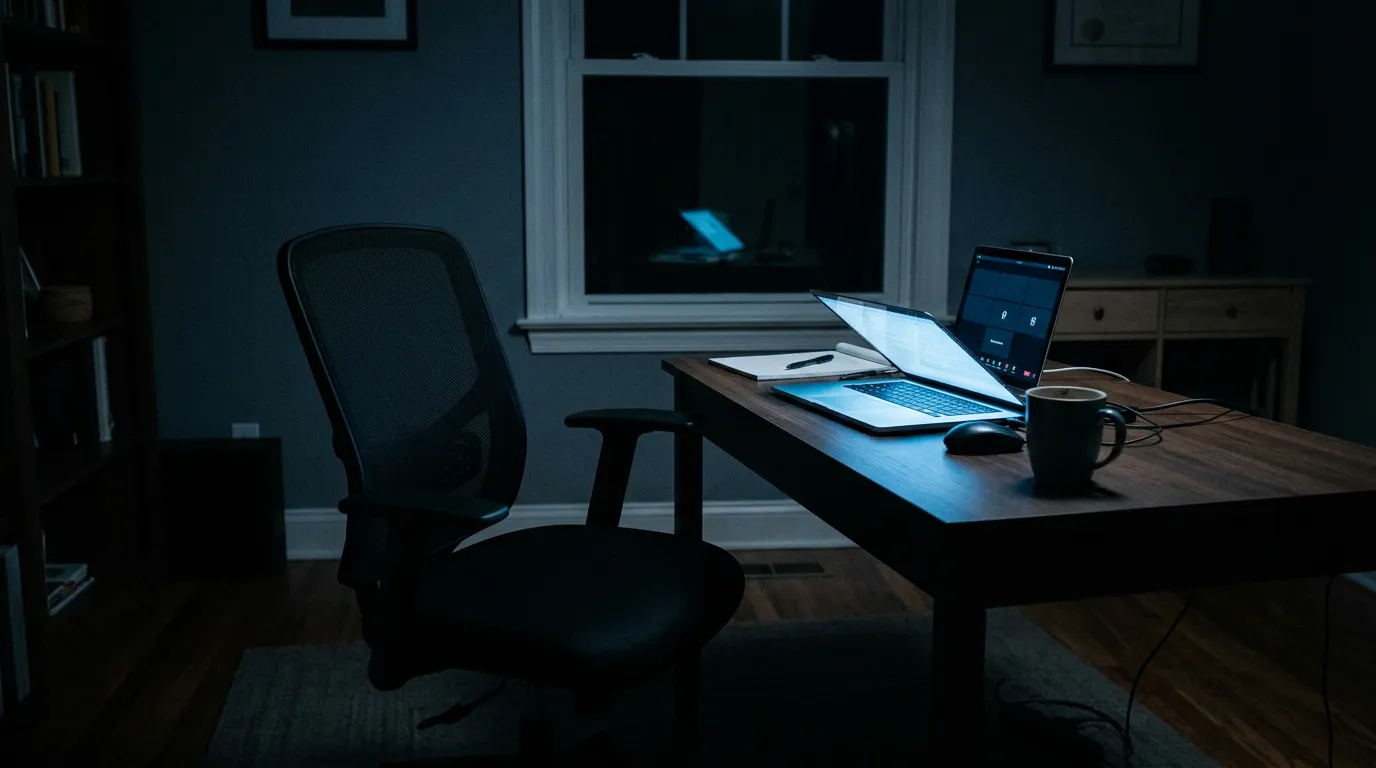
What's actually happening with AI interviews right now
38% of US job candidates have walked out of a hiring process because it required an AI interview. Another 12% say they would if asked. That's from the Greenhouse 2026 Candidate AI Interview Report, a survey of 2,950 job seekers across the US, UK, Ireland, Germany and Australia, picked up by Fortune on 4 May 2026.
If you've sat through one of these things, you already know why.
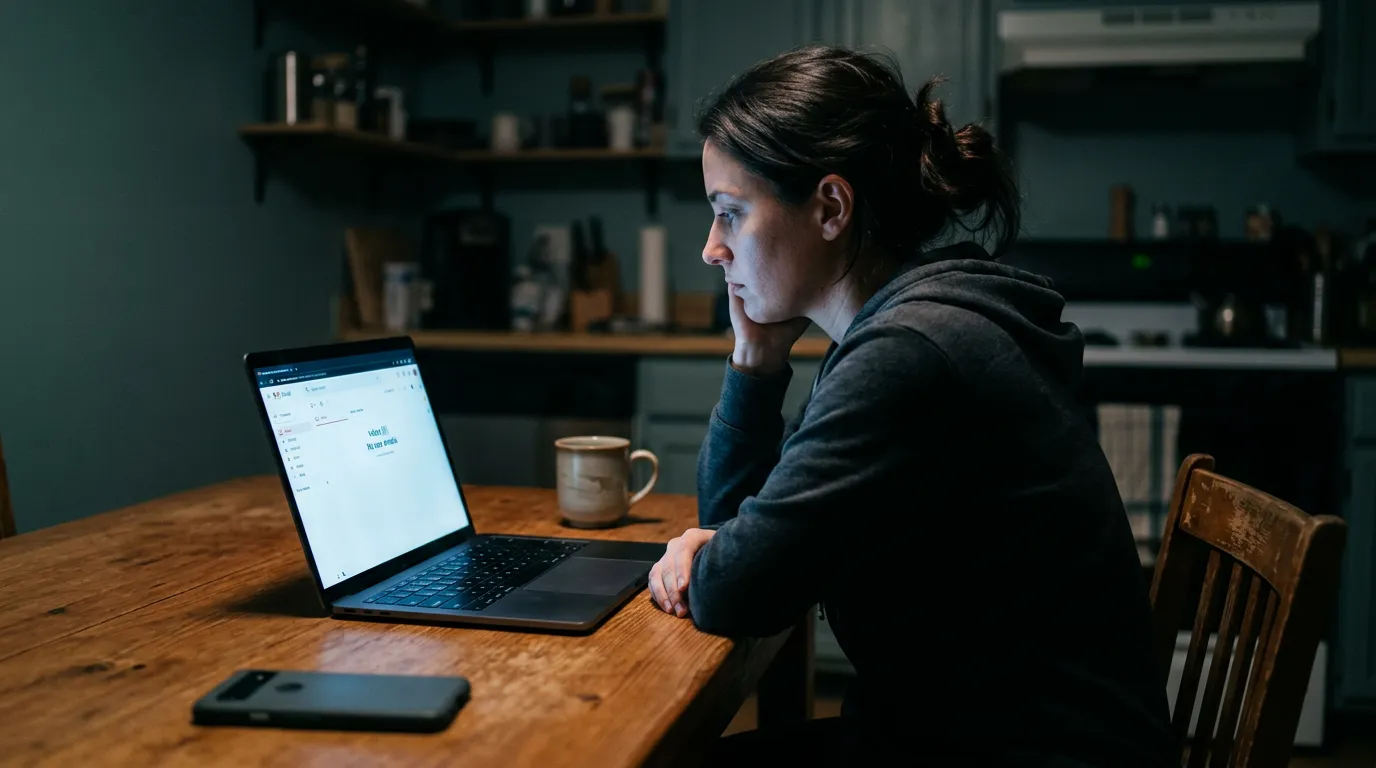
I once watched a friend, a senior engineer with 11 years of shipped product behind him, get asked to talk to a webcam for 25 minutes with nobody on the other end. No interviewer. No follow-up question. Just a counter ticking down. Halfway through the third question he closed the tab. He's not weird. He's the median.
How common are AI interviews now
63% of US job seekers say they've already been through one. That's up 13 percentage points in six months, according to the PR Newswire release of the Greenhouse data. For comparison, that rate sat at roughly 50% at the end of 2025 and was almost zero in 2022.
The growth isn't surprising. Recruiters now see hundreds of applications per role, partly because candidates are using AI to apply faster. Greenhouse's Chief People Officer, Sharawn Tipton, described the back-and-forth as an "arms race, not a hiring process". AI interviews are how employers fight back at scale. And dropout is what happens when the candidates fight back too.
The three things that actually trigger people to quit
Greenhouse asked candidates what specifically makes them bail. Three triggers stood out, and they cluster around the same theme: opacity.
| Trigger | % who say it makes them walk |
|---|---|
| Pre-recorded video interview scored by AI, no human present | 33% |
| Employer didn't disclose that AI would be used | 27% |
| AI monitoring during the interview (eye tracking, screen capture, biometrics) | 26% |
Notice what isn't on that list. "AI is involved" by itself isn't really the issue. Candidates aren't rebelling against automation. They're rebelling against being processed by an algorithm without being told, watched without consent, and judged by a machine no human is reviewing.
The Nature Humanities and Social Sciences Communications study by Liu and colleagues (2025) backs this up on the academic side. Across two experiments, what predicted whether candidates would actually apply to a company using AI in hiring was procedural justice perceptions, not the presence of AI. In plain English: tell people what's happening and give them a fair shot, most of them will stay. Don't, and they won't.
What happens after candidates finish
Even when candidates push through, the experience often ends in silence. 51% of US candidates who completed an AI interview reported they never received any outcome. Not a yes. Not a no. Nothing.
That's not a small number. It means an employer using AI to screen at scale will, on average, leave half the people who actually showed up and answered questions hanging. Honestly, if you've ever wondered whether that recording you sent in last Tuesday is sitting on someone's desk: it probably isn't sitting anywhere.
For context, iHire's 2026 candidate experience survey found 53% of all job seekers were ghosted in the past year, a three-year peak. AI interviews aren't the only ghosting culprit, but the 51% post-AI-interview ghosting rate is essentially that overall ghosting rate concentrated into one stage of the process.
The trust gap is huge, and it's measurable
Only 21% of US candidates believe employers are using AI responsibly and transparently in hiring. Compare that with a separate Greenhouse survey finding that 70% of hiring managers trust AI to make faster, better hiring decisions, while only 8% of job seekers call it fair.
A 62-point gap between hiring managers and candidates on the same question. That's not a misalignment. That's two groups looking at the same tool and seeing two different things.
| Question | Hiring managers | Job seekers |
|---|---|---|
| "AI in hiring is fair" | 70% | 8% |
| "Employers are using AI responsibly" | Not asked | 21% |
| "I have been ghosted after an AI interview" | Not asked | 51% |
Bias perceptions land in an uncomfortable place
Here's a finding that probably won't make either side happy. Greenhouse asked candidates whether they perceived bias from AI interviewers vs human interviewers. The numbers came back almost identical.
- 36% of US candidates reported age bias from AI interviewers. 36% reported it from human interviewers.
- 27% reported race or ethnicity bias from AI. 27% reported it from humans.
So AI isn't measurably more biased in candidates' eyes. It's also not less biased. The defenders of AI hiring tend to argue that algorithms remove human prejudice. Candidates don't see it that way. They see two flavours of the same problem.
That matches what Hunkenschroer and Luetge found in their 2022 systematic review of 36 ethics studies on AI hiring: AI doesn't automatically reduce bias, and in some configurations, especially video analysis trained on historical hiring data, it can actually entrench it.
What this looks like on the employer side
If you're hiring, the math is starting to bite.
A 38% dropout rate against a candidate base of, say, 200 applicants means 76 people self-eject before they finish. If your conversion from interview to hire is 5%, you've just lost 3 to 4 hires you would otherwise have made. At fully-loaded recruitment costs, the Society for Human Resource Management estimates the average cost-per-hire at around $4,700 and the time-to-fill at 44 days. Dropout doesn't just damage your employer brand. It pushes both numbers in the wrong direction.
There's a quieter cost too: the people most likely to walk are the ones with the most options. Senior candidates. Specialists. People in tight labour markets. The candidates an AI screen is least equipped to filter for in the first place.
What candidates can actually do about it
Walking out is one option. It's a legitimate one, especially when an interview is opaque or surveillance-heavy. But practically, here's what tends to work better than dropping out:
- Ask in advance. Email the recruiter and ask whether AI will be used, what it scores you on, and whether a human reviews the recording. Greenhouse's data shows 27% of dropouts are driven specifically by lack of disclosure. Asking forces disclosure.
- Treat the AI like a stricter human. AI interviewers tend to weight clarity, structure and pace heavily because that's what they can measure. Speak in clean, complete sentences. Use frameworks like STAR. Don't trail off. The University of Michigan's research on speaking pace found that interviewers themselves succeed most at gaining agreement at around 210 WPM, but candidates land best in the 140 to 160 WPM band.
- Practise to the camera, not to a person. The single biggest unfamiliar thing about AI interviews is the absence of social feedback. No nodding, no smile. People who haven't rehearsed solo to a webcam panic in the silence and fill it with "um." Reduce that, you reduce the score gap. Our guide on filler words breaks down the threshold (12+ per minute is the cliff edge).
- Keep notes. If you bail, note the company, the trigger and the date. If you finish and get ghosted at the 51% rate, that's also a useful data point. Patterns help you decide whether the next one is worth the time.
The bigger picture
The dropout numbers aren't really about AI. They're about consent and communication. Candidates know they're being filtered. What burns them is being filtered without being told, monitored without permission, and judged with no human in the loop. The 38% walking out is a market signal: this version of AI hiring is unsustainable.
Going back to all-human screening isn't really an option. The application volume that pushed employers to AI in the first place hasn't shrunk, and it isn't going to. The realistic fix is running AI hiring in a way that closes the trust gap: disclosing it up front, keeping a human in the review loop, and actually telling people no when the answer is no. None of that is technically hard. It just isn't being done. Until it is, the 38% will keep climbing.
Jacob, Instant Interview